Four more Styrian companies awarded the VSE label
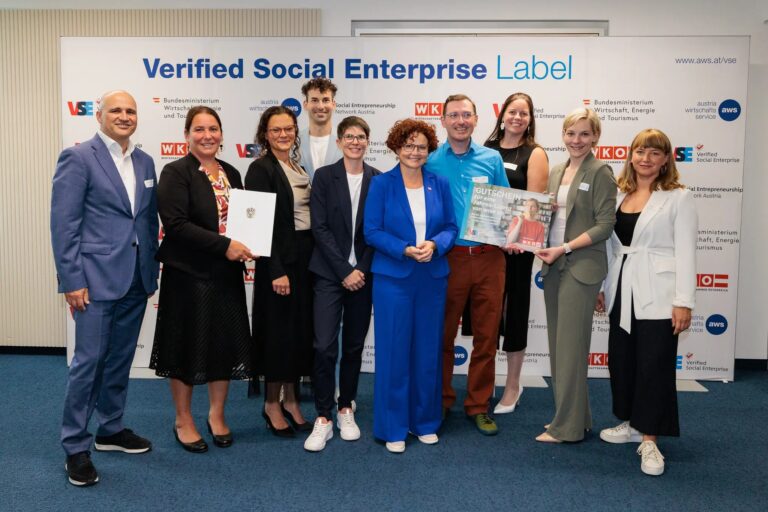
The strength and innovative capacity of Styrian companies were impressively demonstrated in Vienna on 10 September. At a festive ceremony held at the premises of…
Mehr lesen
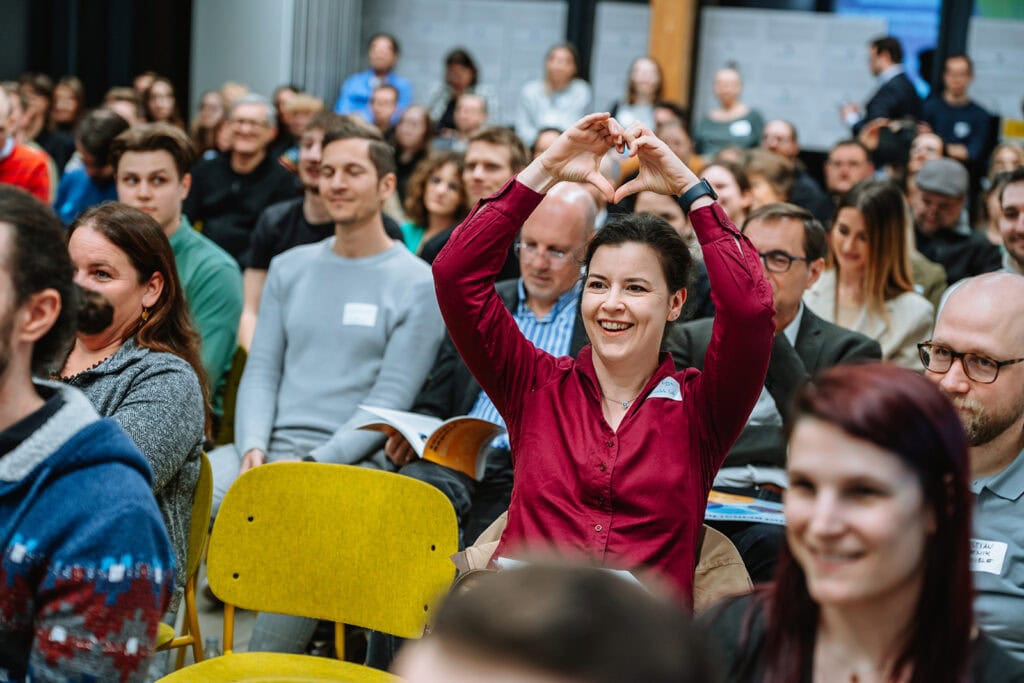
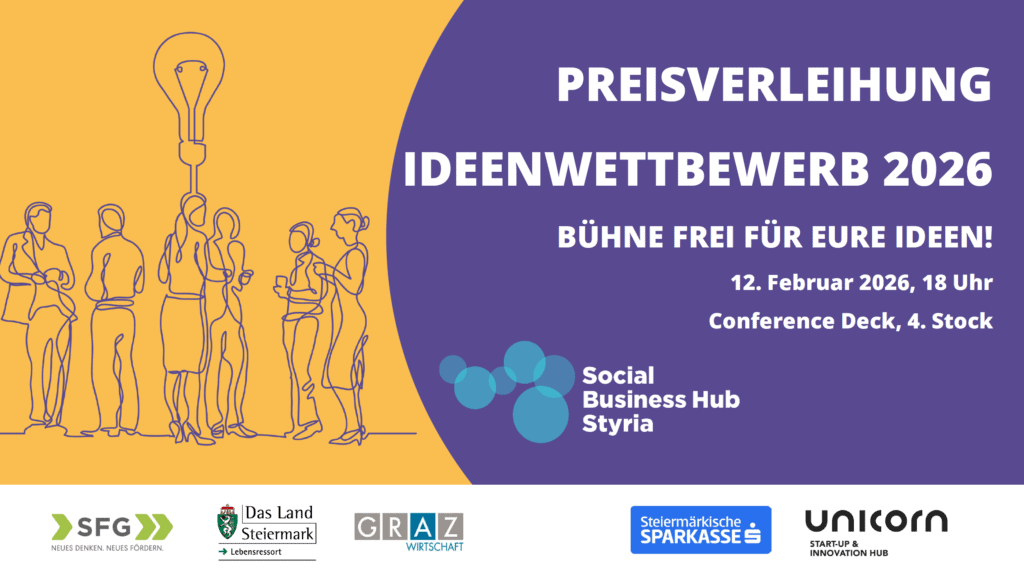
On 12 February, the Social Business Hub Styria hosted the awards ceremony for the region-wide Idea-Call for a sustainable future in Styria. From 6 p.m. onwards, more than 100 guests gathered at the Unicorn Startup & Innovation Hub in Graz to honour those projects that offer innovative approaches to addressing social and environmental challenges in the region.
The annual Ideas Competition aims to highlight and actively support sustainable concepts and impact‑oriented business models. With more than 90 submissions, this year once again demonstrated the remarkable innovative strength of Styria.
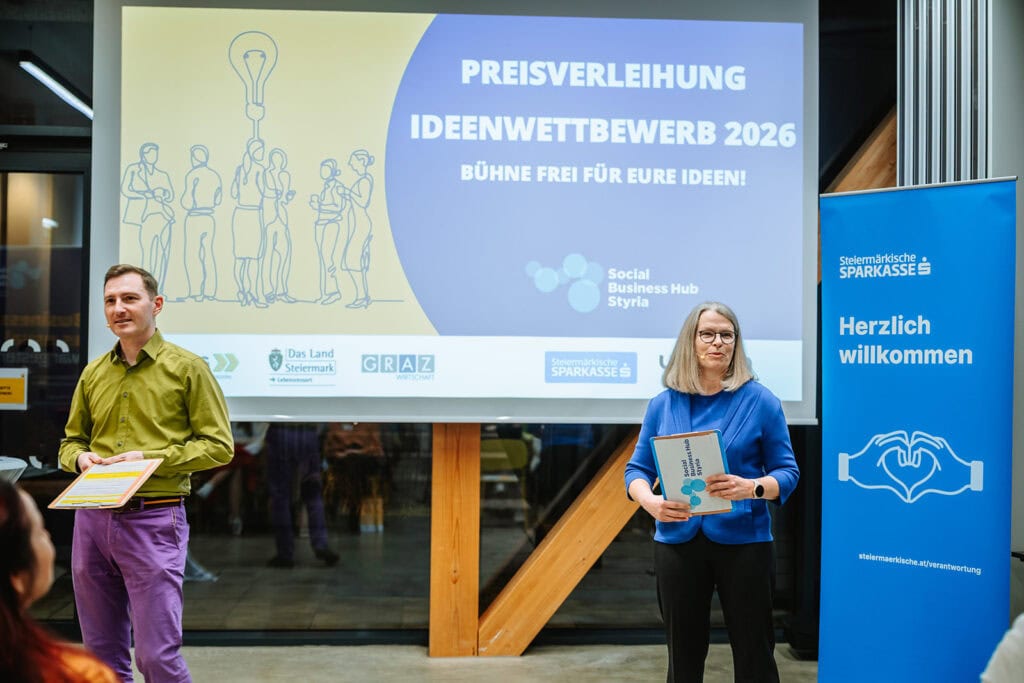
Innovation, Sustainability and Regional Development in Focus
Following the welcome by board members Kirsten Tangemann and Rüdiger Wetzl, as well as video messages and congratulations to the award recipients from Regional Minister Simone Schmiedtbauer, Regional Minister Willibald Ehrenhöfer and City Councillor Kurt Hohensinner, Maximilian Kottnig outlined the development of his startup dualify.
The former winner of the SBHS Ideas Competition has developed an apprenticeship app that digitally connects apprentices, vocational schools and training companies, thereby enhancing both the quality and the public perception of apprenticeship training. This inspiring best‑practice example provided the perfect transition to the presentation of this year’s award‑winning projects.
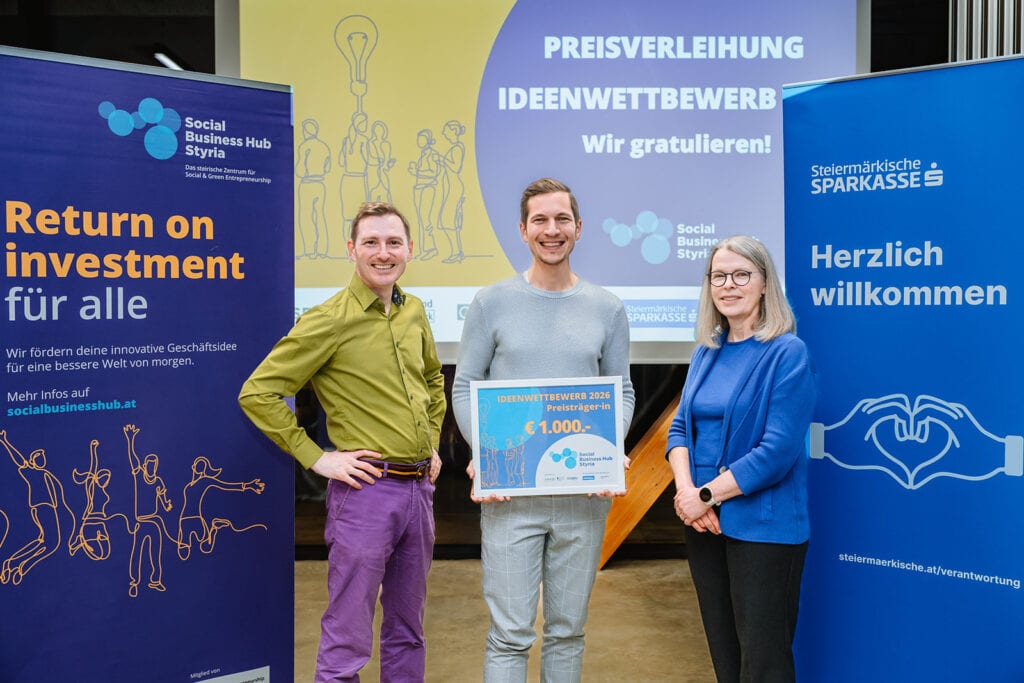
EnFera – The Intelligent, User‑Centred CEMS for Grid‑Supporting Energy Optimisation
Submitted by: Christopher Gradwohl
Problem Statement
Energy communities have the potential to empower citizens to become active contributors to the energy transition. In practice, however, these opportunities often remain untapped, as many communities limit their activities to purely accounting‑based benefits. What is missing is technical coordination, grid‑supportive control and the active use of flexible loads.
Households and businesses are willing to take responsibility, yet there is a lack of incentives and tools that link individual actions with the needs of the wider energy system. At present, grid operators, energy suppliers and energy communities operate largely uncoordinated. As a result, valuable potential for grid stability, as well as social and economic added value, is lost.
Without intelligent control, the integration of renewable energy remains inefficient, slowing down the energy transition and causing unnecessary costs across the system.
EnFera is a user‑centred energy management system that enables energy communities to actively contribute to grid stability. At its core is a platform that intelligently connects and controls decentralised assets such as photovoltaic systems, storage units and electric vehicles.
Using an algorithm‑based optimisation approach, flexible loads are activated when regional energy supply is high or when the grid requires relief. An integrated incentive model rewards members financially for grid‑supportive behaviour while strengthening community engagement through transparency and participation.
The project combines technical expertise from research with a scalable software architecture to increase local value creation and reduce dependence on centralised energy providers. EnFera thus serves as a digital interface between individual households and the power grid of the future, making the energy transition more efficient, fair and economically attractive.
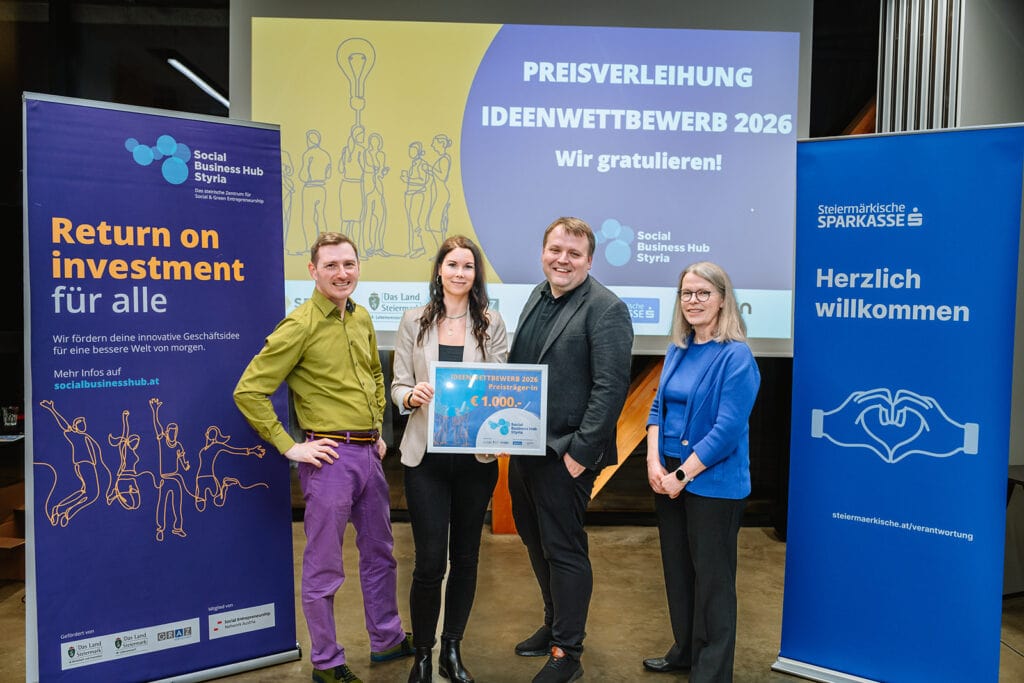
Heureka Kids – The Learning Centre for Curious Minds
Submitted by: Christian Freißling + Margit Höller
Problem Statement
Styria is facing a severe and steadily growing shortage of qualified professionals, particularly in the healthcare and care sectors as well as in technical occupations. At the same time, regions such as Morocco (e.g., Ouarzazate) have many young, motivated individuals with completed training but limited career prospects and restricted access to international labour markets.
The greatest barriers to successful integration include language hurdles, a lack of cultural onboarding and complex bureaucratic procedures for recognising qualifications. Existing recruitment models often fall short because they overlook the social and cultural dimensions of migration. As a result, valuable potential remains unused, leaving both Austrian companies and skilled workers abroad confronted with obstacles that hinder economic development and jeopardise service stability in the region.
Heureka.Kids addresses this gap as the first technical learning centre in Eastern Styria. The project provides children and young people with a physical space — a modern maker’s workshop — where they can learn to use digital and manual tools under expert guidance. The curriculum combines hands‑on building with high‑tech methods such as 3D printing, robotics and electronics.
Behind the project is a team consisting of a university lecturer from TU Graz and an experienced educator, merging technical expertise with age‑appropriate teaching. The aim is to strengthen children’s sense of agency through courses and workshops: they do not merely consume technology — they create it themselves.
The model is designed to be scaled beyond its pilot phase in Hartberg through a licensing approach, making access to technical education widely available and fostering the innovative capacity of the next generation.
RevoPure – Mobile, Energy‑Autonomous Water Purification Unit
Submitted by: Christoph Udier
Problem Statement
Recent events such as landslides and severe flooding have shown that even well‑functioning drinking water infrastructure can fail abruptly following accidents or natural disasters. In such crisis situations, people are confronted with the problem that available water becomes undrinkable due to heavy contamination, and the supply of clean drinking water collapses.
Existing solutions for private emergency preparedness are often technically inadequate, difficult to operate or dependent on external energy sources — which are likely to fail during a disaster as well. Moreover, there is a lack of compact, mobile systems capable of reliably purifying water directly on site.
This uncertainty in emergency water supply affects both civilians in crisis regions and people living in areas with unstable infrastructure, who may be left entirely on their own in critical situations.
RevoPure is a mobile, energy‑autonomous water purification unit that transforms contaminated freshwater into high‑quality drinking water without the need for an external power supply. The system combines advanced filtration technologies with a strong focus on user‑friendliness and durability. Even in the event of a complete infrastructure breakdown, the robust unit remains fully operational.
Its target groups range from NGOs and governmental crisis response organisations to commercial users in remote areas, as well as private individuals in the fields of emergency preparedness and outdoor activities. The business model is based on hardware development in Styria, with initial distribution through B2B channels and partnerships with aid organisations.
RevoPure thus provides a technological response to the growing need for decentralised emergency solutions and ensures access to the essential resource of clean water in extreme situations.
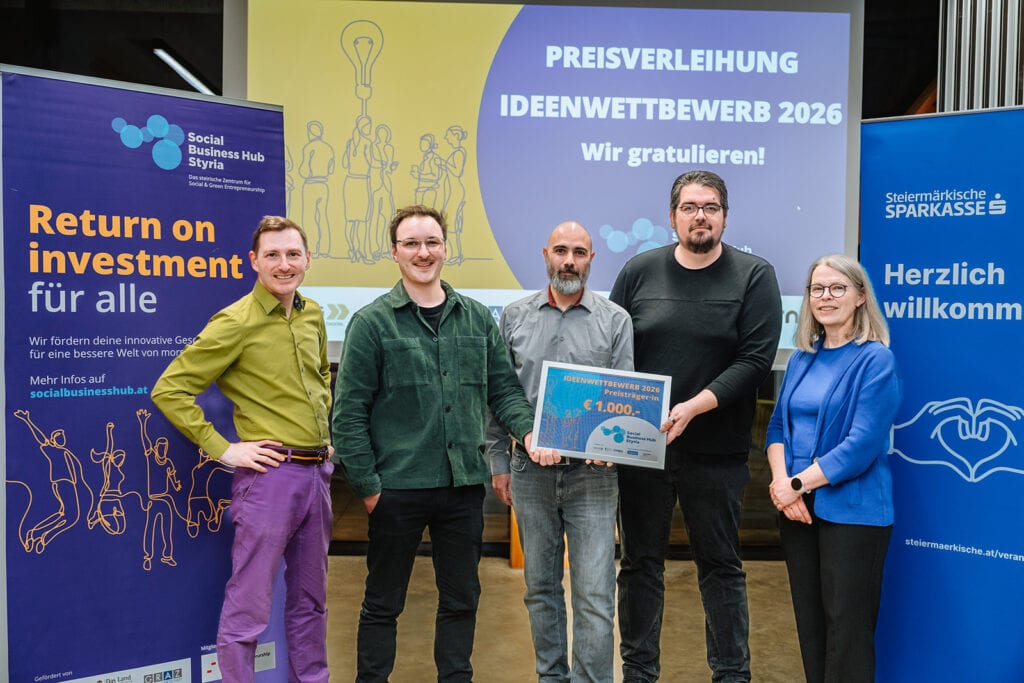
5 Schritte voraus
Submitted by: Seline Serengau, Lilly Krempel, Lena Nöst, Laura Grienschgl und Stefan Fleck, HLW Schrödinger
Problem Statement
The transition from lower to upper secondary school represents a significant challenge for many pupils. In addition to a new social environment and unfamiliar teachers, the markedly higher academic demands in individual subjects often lead to feelings of overwhelm. Many young people lose their footing early on, resulting in frustration, stress and declining academic performance.
Commercial tutoring services are frequently expensive and therefore unaffordable for many families. What is missing are low‑threshold, school‑based solutions in which experienced learners pass on their knowledge directly to younger peers. Without targeted support during this critical phase of their educational journey, the risk of dropping out or failing the first year of upper secondary school increases substantially.
Solution Approach
The junior company 5 Steps Ahead offers structured peer‑to‑peer tutoring for pupils in their first and second years. Digital registration forms are used to identify subject‑specific challenges and provide tailored support. The concept is built on learning at eye level: experienced students from higher grades explain subject matter in a clear and affordable way.
An integrated feedback system after each session ensures continuous improvement of teaching methods. In addition, the team uses option certificates as an innovative financing instrument to secure the project economically and involve supporters.
The aim is to reduce everyday school stress, increase success rates in the lower grades and establish a culture of mutual support that inspires other schools to adopt similar approaches.
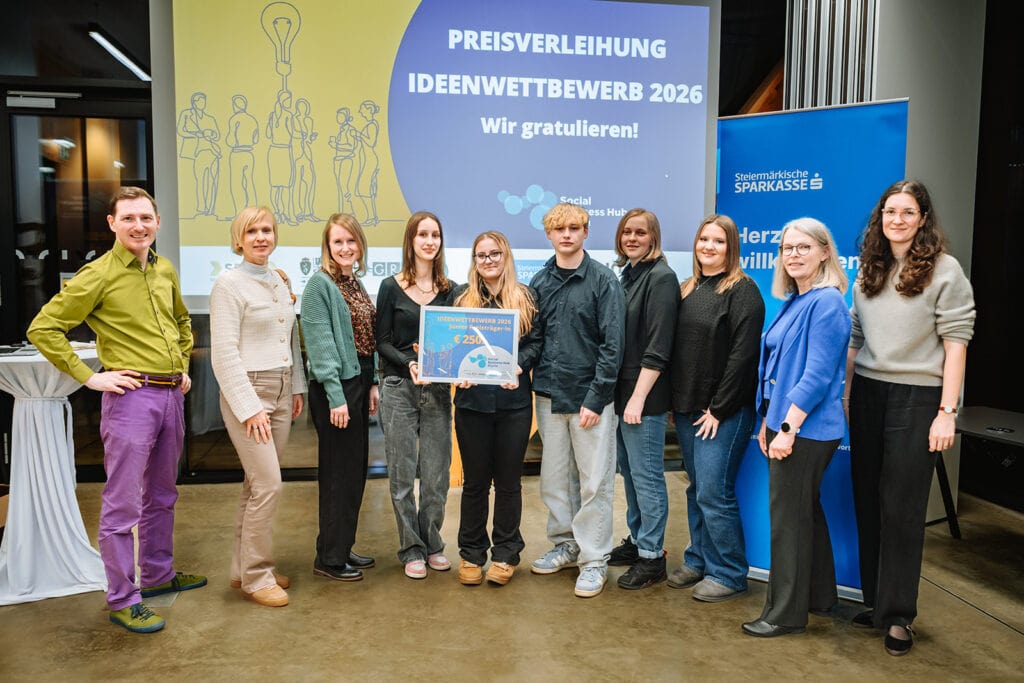
Wo dürfen wir sein? – Public Spaces from the Perspective of Young People
Submitted by: Valentina Ertl & Julia Ertl – Vertreten durch ihre Mutter, Christine Withalm
Problem Statement
Young people often feel unwelcome in public spaces and are confronted with numerous restrictions or pressure to consume. In shopping centres they are expected to buy something, in parks they are quickly labelled as too loud, and on playgrounds they are often asked to make room for younger children. Existing options such as youth centres do not appeal to many, as they cannot be among themselves or feel that the programmes offered do not reflect their interests.
There is a lack of information about where young people are genuinely welcome and allowed simply to spend time without having to spend money or risk being moved on. As a result, they either retreat to unsafe locations such as hazardous “lost places” or isolate themselves at home. Adults often struggle to understand why young people gather in conflict‑prone areas, while youth‑friendly alternatives remain invisible. For many, the question of a safe and accepted place remains unanswered.
The solution is a digital map designed by young people themselves, highlighting safe, public and youth‑friendly meeting spots. On this interactive platform, users can add locations that do not require consumption, offer seating or Wi‑Fi, and where young people are not asked to leave. Places can be rated and commented on anonymously, for example to describe how safe they feel.
To prevent misuse, the app does not include profiles, live location sharing or chat functions, and all entries are moderated. The project serves both as a practical guide for young people and as a valuable source of data for municipalities, showing where suitable spaces are lacking or functioning well. In this way, the perspectives of young people are directly incorporated into urban and community planning.
The rollout will begin regionally, with young people actively involved in shaping the platform through schools and social media to ensure ongoing participation.
The winners selected by a professional jury receive prize money totalling €6,000, as well as non‑cash prizes worth €3,000, made possible through committed sponsors such as Steiermärkische Sparkasse. In addition, the awarded teams benefit from intensive further development of their concepts together with the experts of the Social Business Hub Styria.
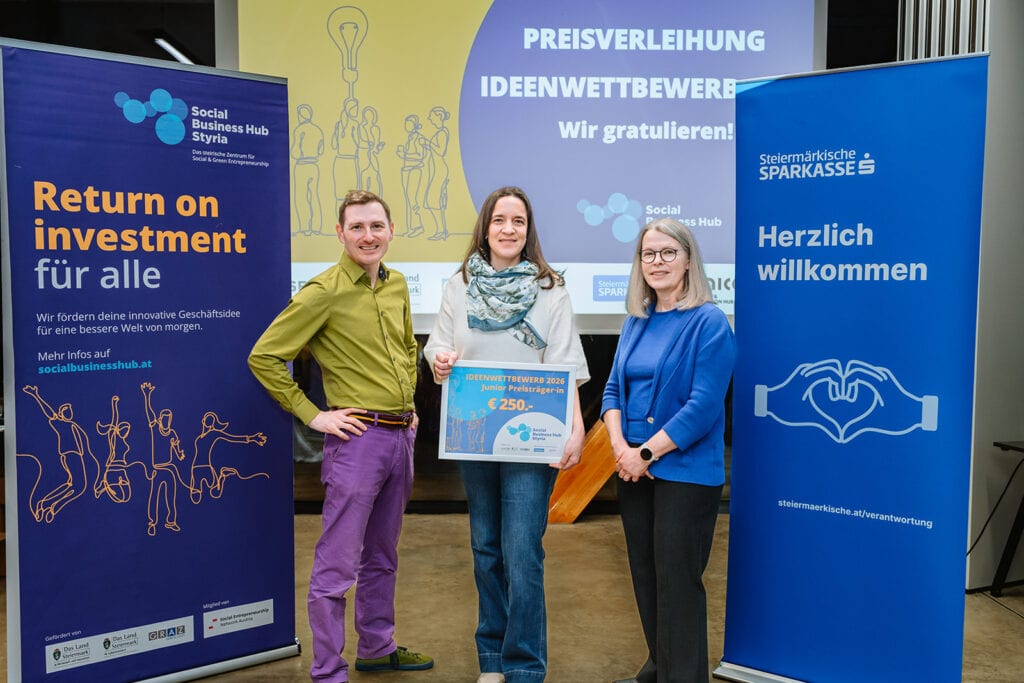
In 2026, two regional focus areas take centre stage — a clear signal of how crucial regional innovation ecosystems are for sustainable transformation:
In addition to the central awards ceremony in Graz, regional award events will therefore also take place in both focus regions. This regional anchoring strengthens local innovation networks and supports the development of long‑term cooperation — a key success factor for sustainable economic activity.
The awards event of the Ideas Competition offered not only a stage for new solution approaches but also a space for exchange, networking and shared learning. Participants, partner organisations and interested guests had the opportunity to experience the dynamism of the regional social‑business landscape first‑hand, gain insights into current trends and challenges, establish new contacts and strengthen existing networks.
We extend our sincere thanks to our funding bodies, cooperation partners and supporters; to our distinguished guests Alina Gmeindl, Stephanie Liskonig, Gerhard Dorn, Susanne Rode and Elisabeth Leitner; and to all applicants who contributed ideas on how today’s social and environmental challenges can be addressed through entrepreneurial approaches. Our gratitude also goes to all guests who accepted our invitation and joined us in celebrating the winners.
Photos:Nadja Fuchs Photography
The strength and innovative capacity of Styrian companies were impressively demonstrated in Vienna on 10 September. At a festive ceremony held at the premises of…
Mehr lesen
Participants of our Social & Green Business Incubation Programme were particularly successful and secured a total of €525,000 in funding. The Sustainable Events Academy by…
Mehr lesen
For the third time, the Social Business Hub Styria hosted Styria’s largest networking event for social and green entrepreneurship at the UNICORN Startup & Innovation…
Mehr lesen